If your carbon monoxide alarm is sounding, stop using the appliance and get everyone into fresh air before looking for a cause. Call 999 if anyone feels unwell and say that carbon monoxide may be involved. Do not relight the stove until the appliance and flue have been checked.
Chimney SweepingSafety & Compliance
This page starts with the action rather than the explanation, because if an alarm is sounding right now the explanation can wait.
Carbon monoxide has no smell, no colour and no taste. The alarm is the only warning you get, and the correct response to it is the same whether you think it is genuine or not.
Do this now
If the alarm is sounding, stop using the appliance and get fresh air into the property and people out of it. Do not go looking for the cause first.
- Let the fire go out, do not add fuel and do not attempt to damp it down
- Open doors and windows
- Get everyone, including pets, out into fresh air
- Call 999 if anyone feels unwell, drowsy, sick or confused, and say you suspect carbon monoxide
- Do not use the appliance again until it and the flue have been checked
Symptoms worth knowing
Carbon monoxide poisoning is often mistaken for flu or a hangover: headache, dizziness, nausea, tiredness and confusion, typically affecting more than one person in the house and easing when they leave it. Anyone with those symptoms alongside an alarm needs medical advice, not reassurance.
For current official guidance on symptoms and what to do, check the NHS and gov.uk pages rather than relying on any trade website, including this one.
What actually causes it around a solid fuel stove
Carbon monoxide is produced by incomplete combustion, and it reaches the room when combustion gases cannot leave properly. Around a stove, the usual chain is a restricted flue or insufficient air, then poor combustion, then spillage into the room.
- A blocked or partially blocked flue, commonly soot, tar or a bird's nest
- A failed or badly sealed register plate or flue connection letting gases back into the room
- Too little combustion air, often after draught proofing or with an extractor fan running
- Downdraught pushing gases back down the flue
- Burning wet wood or running the stove shut right down so it smoulders
- A cracked stove body, warped baffle or perished door seal
Checks that are safe to do yourself
You can check that the alarm itself is in date, since sensors expire and most units carry a replacement date on the casing. You can check that it is sited correctly, roughly at head height and within a few metres of the appliance but not directly above it. You can look for soot marks around the stove door or on the wall above the appliance, which is a strong sign of spillage.
What you cannot safely do is decide the alarm was a false reading and carry on burning. If it sounded, the appliance and flue need checking first.
What a proper check involves
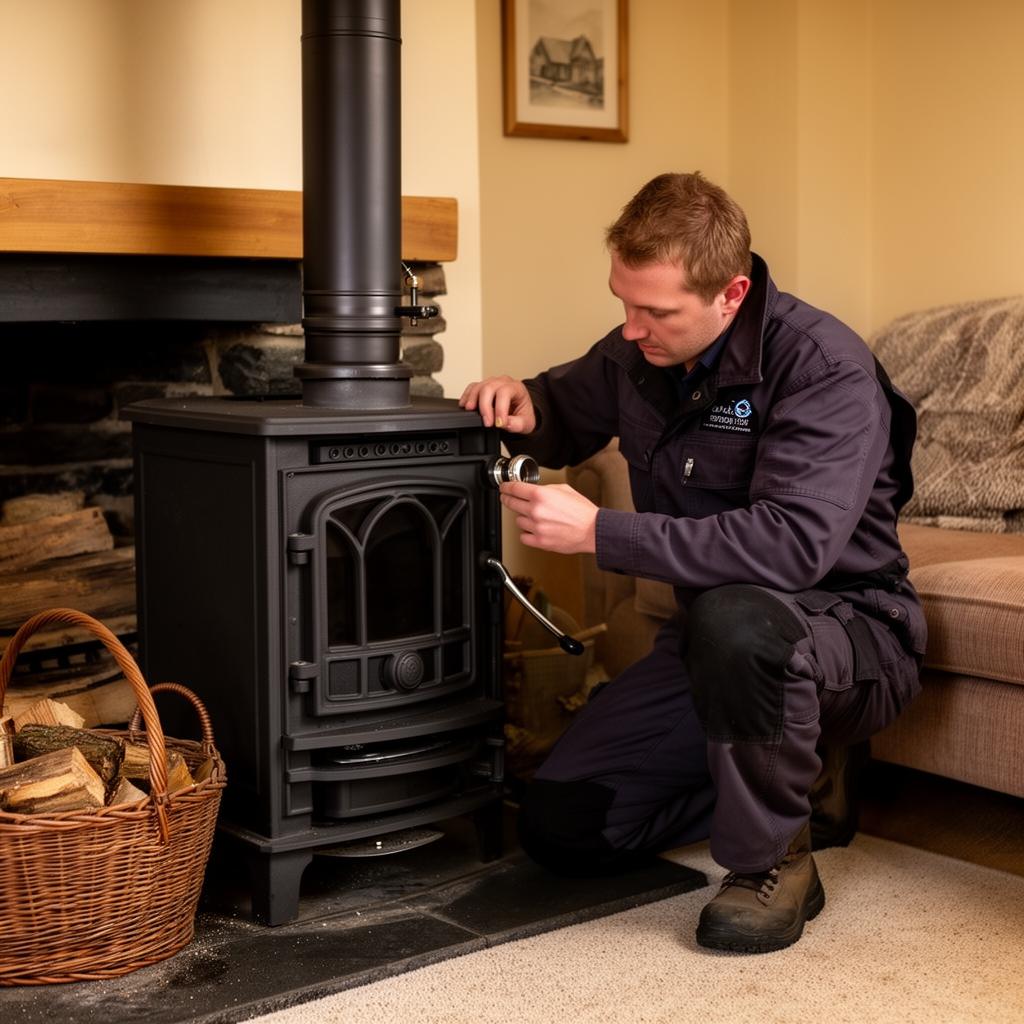
We sweep the flue, which removes the most common cause outright, then run a camera up the bore to confirm it is clear and intact from appliance to terminal. Alongside that we look at the appliance itself, the door and glass seals, the baffle and the flue connection, and at the room ventilation.
If the flue is sound and the stove is sound, the answer usually lies in air supply, and that is fixable. What matters is that the appliance is not used again on the assumption that the alarm was wrong.
Frequently asked questions
My alarm sounded once and stopped. Is that a false alarm?
Treat it as real. A short burst usually means a genuine transient release, such as a puff of spillage when the door was opened or when the wind turned. It tells you gases are reaching the room, which is the thing to investigate.
Where should the alarm be fitted?
In the same room as the appliance, roughly at head height, and not directly above the stove or in a corner where air does not circulate. Check the manufacturer's instructions for the exact siting, as they vary between models.
Do I legally need a carbon monoxide alarm?
In Scotland the rules on alarms in homes are set nationally and apply to properties with a carbon fuelled appliance. The rules are updated from time to time, so confirm the current requirement on gov.scot or gov.uk rather than taking a date from a trade page.
Can sweeping the chimney fix it?
It fixes it when the cause is a blocked or restricted flue, which is the most common single cause. It also rules that cause out definitively, so whatever remains can be diagnosed properly rather than guessed at.
How soon can you look at it?
Tell us it is an alarm rather than a routine sweep when you get in touch, and we will treat it accordingly. Do not use the stove in the meantime.
Alarm sounded? Do not use the stove until it is checked
Get in touch and say it is a carbon monoxide alarm. We will sweep, camera the flue and check the appliance and ventilation.