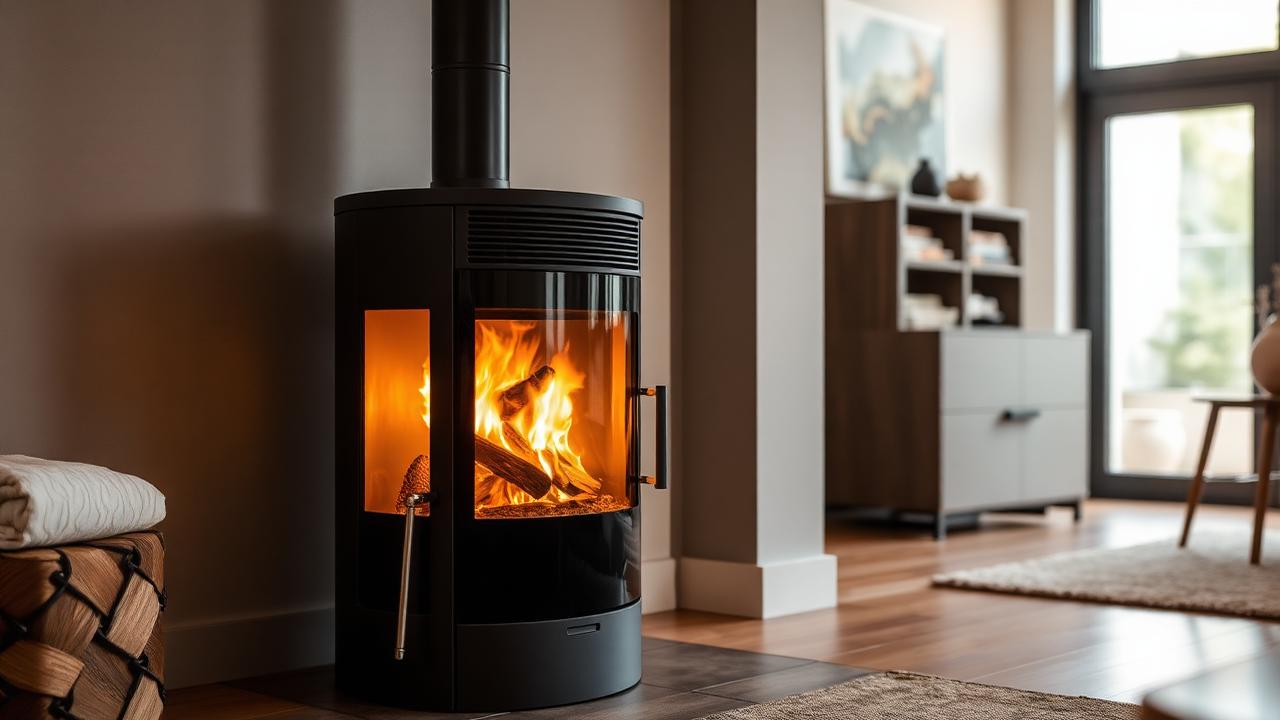
Do not use a stove with cracked door glass. Even a small crack compromises the barrier between the fire and room air and may spread with heating. Let the stove cool, identify its make and model and replace the panel and its gasket with parts suited to that appliance.
Stove ServicingProblems & Repairs
Stove door glass is not glass in the window sense. It is a heat resistant ceramic panel designed to hold back a fire at several hundred degrees while staying dimensionally stable. That is why it survives normal use for years, and why a crack in it is a genuine fault rather than a blemish.
The short version: stop using the stove, find out why it cracked, and have the panel and its seals replaced together.
Why the stove should not be used with cracked glass
A cracked panel is no longer a sealed barrier. It allows uncontrolled air into the firebox, which upsets the burn and can push the appliance beyond its designed temperature. It can also allow smoke and combustion gases into the room, and a crack that has already run once can fail further with the next thermal cycle.
There is no safe way to patch it. Heat resistant tape, sealant and clear silicone all fail at firebox temperatures.
The common causes
Panels rarely crack for no reason, and knowing the cause stops it happening to the replacement.
- A log rolling forward and striking the panel, the most common cause by far
- Overfiring, running the stove far hotter than intended
- Door clamps or retaining brackets overtightened, leaving no room for expansion
- A perished or hardened glass gasket, so the panel bears directly on metal
- A knock during cleaning, particularly with the glass cold and a scraper in hand
- Slamming the door repeatedly
How to handle it safely at home
Let the stove go completely cold before touching anything. Do not attempt to lift a cracked panel while it is warm, because ceramic under thermal stress can part suddenly and the edges are sharp.
Once cold, keep the door closed, keep children and pets away from it, and put a note on it if anyone else in the house lights fires without thinking.
What replacement involves
The panel is cut to the model, so the make and model of the stove is the first thing needed. It sits in a gasket, and that gasket should always be renewed at the same time, since the old one will have hardened and will not seat a new panel evenly.
The clamps are then tightened to allow for expansion rather than as tight as they will go, which is the step most commonly got wrong and the reason some replacement panels crack within a season.
Getting it done as part of a service
Cracked glass usually shows up alongside other wear, because whatever overfired or knocked the stove has affected other parts too. It is worth doing the panel, the door rope, the glass gasket and a check of the baffle and fire bricks in one visit rather than piecemeal.
It is also a sensible moment to sweep the flue. A stove that has been overfired has usually been run hard, and a stove that has been run cool and smoky to compensate for a leaking door will have left deposit behind. Either way the flue is worth clearing while the appliance is out of action anyway.
Tell us the make and model when you get in touch and we can come prepared rather than making two trips.
Frequently asked questions
Is a hairline crack still a problem?
Yes. A hairline crack is a stress line that will propagate with the next few heat cycles. It also already breaks the seal. Replace it rather than watching it.
Why did it crack when nothing hit it?
Thermal or mechanical stress rather than impact. Overtightened clamps, a hardened gasket or overfiring all put a panel under load without anything touching it. That is why the gasket and clamp settings matter as much as the panel itself.
Can I buy the glass and fit it myself?
Some competent owners do. The points to get right are exact sizing to the model, renewing the gasket rather than reusing it, and not overtightening the clamps. If any of that is unclear, have it done, because a badly fitted panel fails and the second panel costs the same as the first.
How do I stop the replacement going the same way?
Load logs so they cannot roll against the door, avoid running the stove flat out for long periods, clean the glass cold with a proper stove glass cleaner rather than a blade, and close the door rather than letting it swing shut.
Stove out of action with cracked glass?
Send us the make and model with your enquiry and we will sort the panel, the seals and a full service in one visit.