Costs & Process
Stoves are simple, but they contain consumable parts that degrade under repeated heating and cooling. Door ropes flatten, firebricks crack, baffles warp and glass hazes. None of these fail dramatically — the stove just gradually burns worse, uses more fuel and dirties its glass faster, and people assume that is normal ageing.
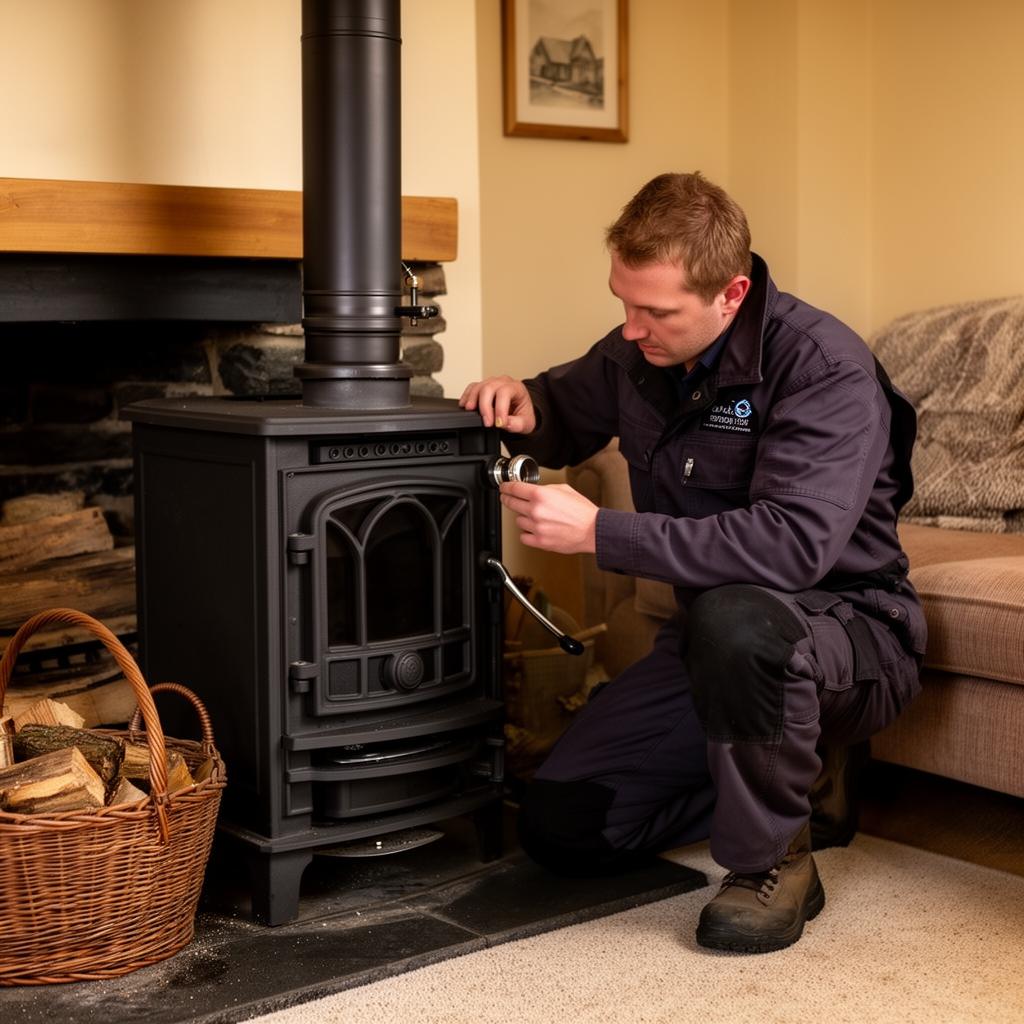
A service replaces the wearing parts and resets the stove to how it should run.
Seals and ropes
Door and glass ropes are the single most influential wear item. Once compressed, they let uncontrolled air into the firebox, which defeats the air controls and the airwash. Symptoms are a fire that is hard to slow down, glass that blackens quickly and fuel that disappears faster than it used to.
The paper test tells you where you stand: shut a strip of paper in the door and pull. Resistance means the seal is doing its job; a clean slide out means the rope needs replacing.
Baffle plate and throat
The baffle sits at the top of the firebox and forces flue gases to take a longer path, extracting more heat and improving secondary combustion. Steel baffles warp and eventually crack under sustained heat, and vermiculite ones crumble. A missing or damaged baffle sends heat straight up the flue and can overheat the appliance top.
Firebricks and grate
Firebricks protect the stove body from direct flame and hold heat in the firebox. Hairline cracks are normal and not urgent; pieces missing or bricks that have broken through are not, because the steel behind them is then taking direct heat. Grates and ash pans warp over time, particularly where the stove has been run very hot on mineral fuel.
Glass, air controls and flue connection
Glass is checked for cracks and hazing and replaced with new rope and clips where needed. Air control mechanisms are cleaned and freed off — they seize with ash and rust. The flue connection and register plate seal are checked for leakage, and the flue itself swept.
The service finishes with a draw test and a check that the carbon monoxide alarm is present and working.
When to book one
Once a year for a stove in regular winter use, ideally alongside the annual sweep so the whole appliance and flue are dealt with in one visit. Book sooner if the door feels loose, the glass blackens within a single fire, the stove is harder to control than it was, or you can see damaged bricks or a sagging baffle.
Frequently asked questions
Is a service the same as a sweep?
No. A sweep clears and inspects the flue. A service deals with the appliance — ropes, glass, baffle, bricks, grate and controls. Most people have both done in the same visit, which is the sensible approach.
Can I replace door rope myself?
It is possible, but getting the right diameter, seating it evenly and using the correct adhesive matters more than it looks. An unevenly seated rope leaks air at one point and you end up with the same symptoms you were trying to fix.
My stove is ten years old — is it worth servicing?
Usually yes. A well-built stove body lasts decades; it is the consumables that wear. Replacing ropes, bricks and a baffle is a fraction of the cost of a new appliance and installation.
Book a service and sweep together
One visit for the flue and the appliance, with worn parts identified and quoted before anything is replaced.