Crumbling chimney mortar can let rain into the stack and eventually loosen masonry. Look from the ground, not from the roof: sandy, open joints or displaced bricks need a builder or roofer to assess the stack. Chimney sweeping, cowls and flue surveys do not replace structural repointing.
Chimney SweepingProblems & Repairs
Chimney mortar fails before the rest of the house because the stack takes weather on every side and gets no shelter from anything. In coastal and exposed inland parts of Angus, North Fife and East Perthshire that happens faster than most people expect.
The question is never really whether the mortar is eroding. It is how far along it is, and whether it has started letting water through.
The short answer on severity
Mortar that is recessed a few millimetres and still hard is weathering, and it can be left under observation. Mortar you can rake out with a key, mortar that has gone sandy and pours out, or joints that are open right through are past that point and need repointing before water starts tracking inside.
The stage after that is movement: bricks or stones sitting loose, a visible lean, or a stack that has parted from the flashing. That is a structural job and it should not wait.
- Stage one, surface weathering only, monitor annually
- Stage two, soft or missing mortar, repoint
- Stage three, loose masonry or a lean, structural repair or rebuild
Why it matters inside the house
An open joint is a straight path for driven rain into the core of the stack. From there it soaks into the internal brickwork of the chimney breast and shows up as staining on the top floor, and it also wets the flue, which mixes with soot salts and makes the staining worse and harder to cover.
A wet stack is also a cold stack, and a cold flue draws badly. Plenty of the poor draw complaints we look at in autumn turn out to have a saturated stack behind them.
Safe checks and honest limits
Look up from the garden with binoculars in good light, ideally from two sides of the house. Photograph the joints. Compare against a neighbouring stack of the same age and construction, which gives you a sense of what normal wear looks like on your street.
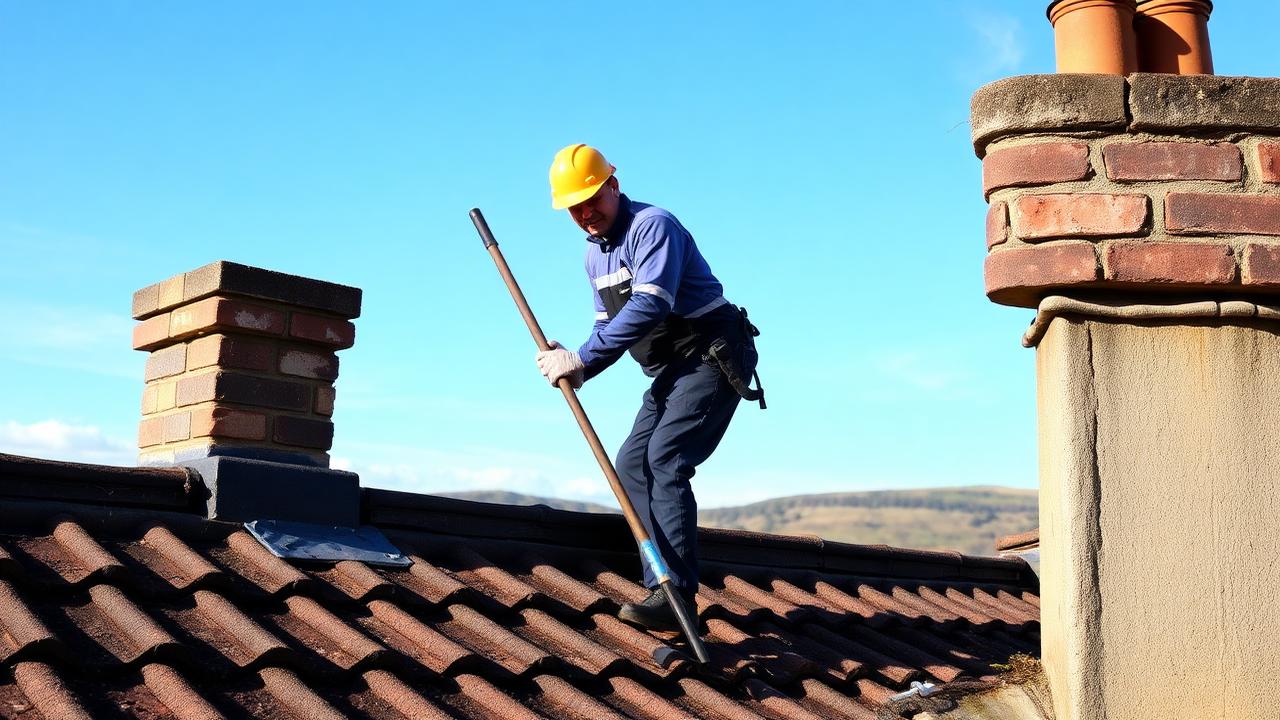
Do not go up. This is not a case of being cautious for the sake of it. Working at a chimney head means being at roof edge on a pitched surface, and the mortar you are inspecting may be exactly what a hand or foot ends up resting on.
What repointing involves
The old joint is raked back to sound material, cleaned out, and refilled with a mortar mix matched to the existing masonry. On older stone and lime built property the mix matters a great deal, because a hard cement mortar on soft stone traps water and pushes the erosion into the stone itself, which is much worse than the problem it was meant to fix.
It is trade work at height, priced with access included, and it is a builder or roofer rather than a sweep.
What we can do while it is being sorted
If the stack is being worked on, it is the natural moment to deal with the flue and the terminal at the same time, because the access is already there. That covers capping unused flues, fitting or replacing a cowl, and sweeping the working flue so it starts the season clear.
If you are unsure whether the internal flue has been affected by water, a camera survey shows the bore condition rather than leaving it to guesswork.
Frequently asked questions
How long does chimney pointing last?
It depends far more on exposure and mix than on age alone. A sheltered stack repointed with an appropriate mortar can go decades. An exposed coastal stack will need looking at much sooner, which is why an annual glance with binoculars is worth the two minutes.
Is a crumbling stack dangerous?
It can be. Loose masonry above a roof can fall, and a stack that has lost its mortar bond is vulnerable in high wind. If you can see displaced bricks or a lean, treat it as urgent and keep people away from the ground below it.
Should I take the chimney down instead?
Only if the flue is genuinely finished with. Removing a stack is not reversible, it affects the roof line, and it removes an option that adds value for anyone who later wants a stove. If there is any chance of the flue being used again, repair rather than remove.
Do you repoint chimneys?
No. We are chimney sweeps and stove installers, and we work on flues, cowls, liners and appliances. Masonry repair is a separate trade and we will not pretend otherwise.
Getting the stack repaired? Sort the flue at the same time
Sweeping, capping unused flues and fitting cowls all make sense while access is up. Tell us the dates and we will fit around the builder.