
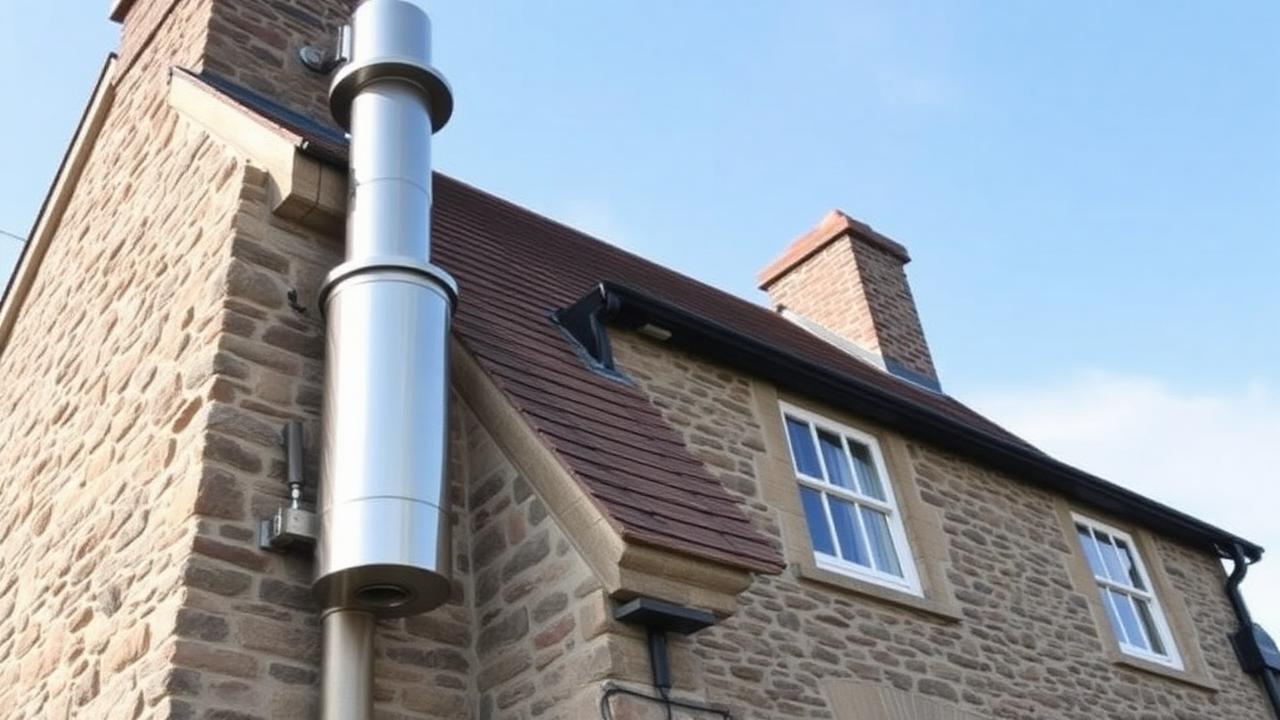
Water appearing by the chimney after rain can enter through an uncapped pot, failed flashing, eroded pointing or damaged flaunching. A cowl may help when rain is falling down the flue, but it will not repair a leaking roof junction or masonry. Observe where and when the stain appears before arranging the appropriate trade.
Mark the edge of a stain and note whether it spreads during wind-driven rain or remains after the roof has dried. A photograph taken from the ground can help show the pot and stack without climbing onto the roof. If the leak follows the roof line rather than the flue opening, ask a roofer or builder to inspect it.
Cowl and Flue WorkProblems & Repairs
Water staining that appears within a day of heavy rain and fades in dry weather is rain ingress. It is different from the slow, permanent tide mark of salt damp, and it is usually cheaper to solve, because a rain leak has a physical entry point somewhere and physical entry points can be found.
A chimney stack is the most exposed masonry on the house. It stands proud of the roof on all four sides, it has an open top, and it has a joint where it passes through the roof covering. Every one of those is a place water gets in.
Answer first: the four usual entry points
In order of how often we find them, rain gets in through the open pot on an unused flue, through failed lead flashing where the stack meets the roof, through eroded mortar joints on the stack, and through a cracked or missing flaunching, which is the mortar bed that holds the pot in place.
- Open, uncapped pot on a disused or lightly used flue
- Lead flashing lifted, split or badly repaired with sealant
- Soft, hollow or missing mortar in the stack joints
- Cracked flaunching around the base of the pot
- A cowl fitted without a rain shield on an exposed stack
How to tell them apart from the ground
Where the stain appears indoors is a strong clue. Water showing at ceiling level in the room directly below the roof usually means flashing. Water showing in the middle of the chimney breast on the top floor points at the stack itself, either pointing or the open pot. Water arriving in the fireplace or on the hearth, sometimes with a metallic or sooty smell, is coming straight down the flue.
Timing helps too. A leak that only shows in driving rain from one direction is almost always a windward face problem, which means pointing or flashing rather than the open top. A leak that shows after any prolonged rain, wind or not, is more likely the pot.
What you can safely check yourself
From the ground with binoculars you can see a surprising amount: whether the pot is capped, whether the flaunching is cracked, whether the mortar lines look recessed and sandy, and whether the flashing is sitting flat or has lifted. Photograph it on a phone at maximum zoom and you have something to show whoever quotes.
Inside, feel the chimney breast an hour after rain and again a day later. Cold and wet that dries is ingress. Cold and wet that never dries is a different problem, and our guide on damp patches around a chimney breast covers it.
What is not a DIY job
Anything requiring roof access. Chimney stacks sit at the highest and most awkward point of a roof, and the work needs a scaffold or a tower rather than a ladder leaned against a gutter. Pointing, flashing and flaunching are all trades jobs at height and should be priced as such.
Sealant smeared over flashing is the classic false economy. It buys a season, traps moisture behind it, and makes the eventual proper repair more expensive.
Where we come into it
Our side of this is the flue and the terminal. If rain is coming down an open pot, capping it properly with a cowl that sheds water while keeping the flue ventilated solves the problem outright and keeps birds out at the same time. If you are not sure whether water is entering at the top or soaking through the sides, a CCTV survey up the flue shows the internal condition and often makes the answer obvious.
Where the fault is structural masonry we will tell you plainly that you need a roofer or a builder rather than a sweep, and what to ask them for.
Frequently asked questions
Can rain get into a chimney that has a stove fitted?
Yes, though a lined flue with a proper terminal makes it much less likely. Rain entering a lined system usually means the terminal is missing a rain cap or the flashing at the roof line has failed.
Will capping the chimney cause damp?
Not if it is capped correctly. A capped terminal must still be ventilated so air moves through the stack and dries it out. Sealing a flue completely at both ends is what causes damp, not capping the top.
Why does the leak smell of soot?
Water passing through soot deposits picks up salts and tar and carries them into the plaster. That is why chimney leaks often leave a brown or yellow stain rather than a clean water mark, and why the stain can keep reappearing after painting.
Do you carry out the roof work yourselves?
We fit cowls and carry out flue work. Structural stack repointing, lead flashing and roof repairs are a builder or roofer job, and we will say so rather than take on work outside what we do.
How quickly should a leak be dealt with?
Before winter if you possibly can. Water in masonry freezes, expands and opens the joint further, so a small autumn problem is a bigger spring one.
Will a chimney cowl stop water around the stack?
Only if rain is entering the flue through the pot. It will not fix flashing or masonry defects around the stack.
Not sure where the water is getting in?
A camera survey up the flue and a look at the terminal usually settles it. Send us a photo of the stack and we will tell you what we think.