Problems & Repairs
A brown or yellowish stain spreading across a chimney breast is one of those problems people redecorate over twice before investigating. It always comes back, because paint does not address water, and the source is nearly always above the ceiling.
There are three realistic causes, and they can be distinguished without opening anything up.
Rain ingress from the stack
An open, uncapped chimney is a funnel. Rain enters at the pot, soaks into the flue lining and brickwork, and travels down until it meets a cold surface where it shows through the plaster. This is the most common cause on unused chimneys in older properties, and it typically worsens noticeably after a spell of wet weather.
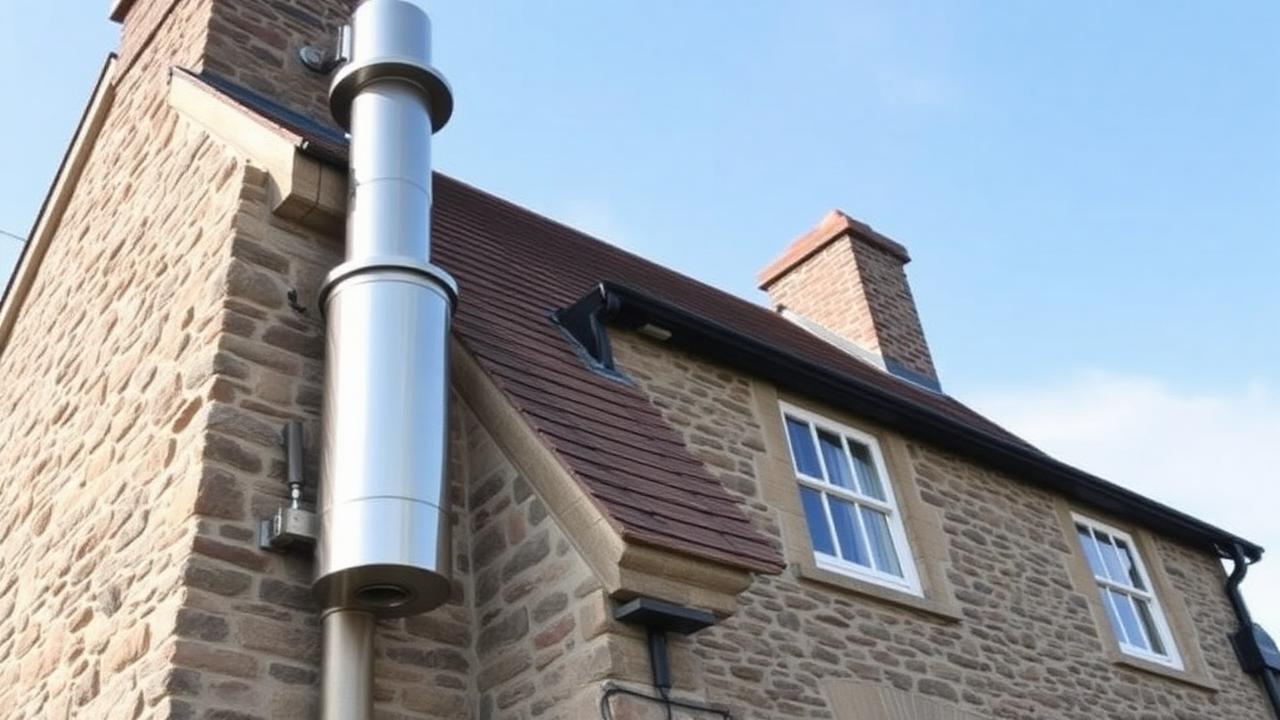
Failing flaunching — the mortar fillet holding the pot — and cracked or missing lead flashing where the stack meets the roof do the same job from the outside. Both are visible from ground level with binoculars on a clear day.
Condensation inside the flue
This one catches people out because it worsens after the chimney is blocked up. Seal an unused flue at both ends and the stack cannot breathe; moisture in the masonry has nowhere to go and condenses inside. The stain looks identical to rain ingress but is worst in cold weather rather than wet weather.
The remedy is ventilation. A capped-but-vented terminal at the top and an air brick or vented cover at the bottom lets the stack dry out while still keeping rain and birds out.
Hygroscopic salts from old soot
Chimneys that carried coal or wood smoke for decades hold soot salts in the brickwork. These salts attract moisture from the air, so the breast appears damp even when the stack is watertight. The tell is a stain that never fully dries out and often shows crystalline deposits, and one that reappears through fresh plaster within weeks.
Sweeping removes the loose soot, but where salts have migrated into the plaster the affected area needs stripping back and re-plastering with a salt-retardant system. Painting over it will not hold.
What to do first
Before any redecoration, get the flue swept and surveyed. Sweeping removes soot that holds moisture, and a camera survey shows whether the liner or parging has failed internally. Only once you know which of the three causes you are dealing with is it worth spending money on capping, flashing or plastering.
Frequently asked questions
Should I just block the chimney up?
Not fully. Sealing a flue at both ends is the classic way to create condensation damp. Cap it with a vented cover and fit a vent at the bottom so air can still move through the stack.
Can a sweep tell me which type of damp it is?
Largely, yes. The pattern of staining, its seasonal behaviour and what the camera shows inside the flue narrow it down quickly. Structural work like flashing and flaunching repair is a roofing job, but knowing what to instruct is the hard part.
Does a working stove reduce chimney damp?
It helps, because regular heat dries the stack. Lining the flue also isolates the masonry from combustion moisture, which is one of the secondary benefits of a liner in an older chimney.
Find out what is actually causing the damp
A sweep and camera survey gives you evidence before you spend on plastering or roofing work.