Costs & Process
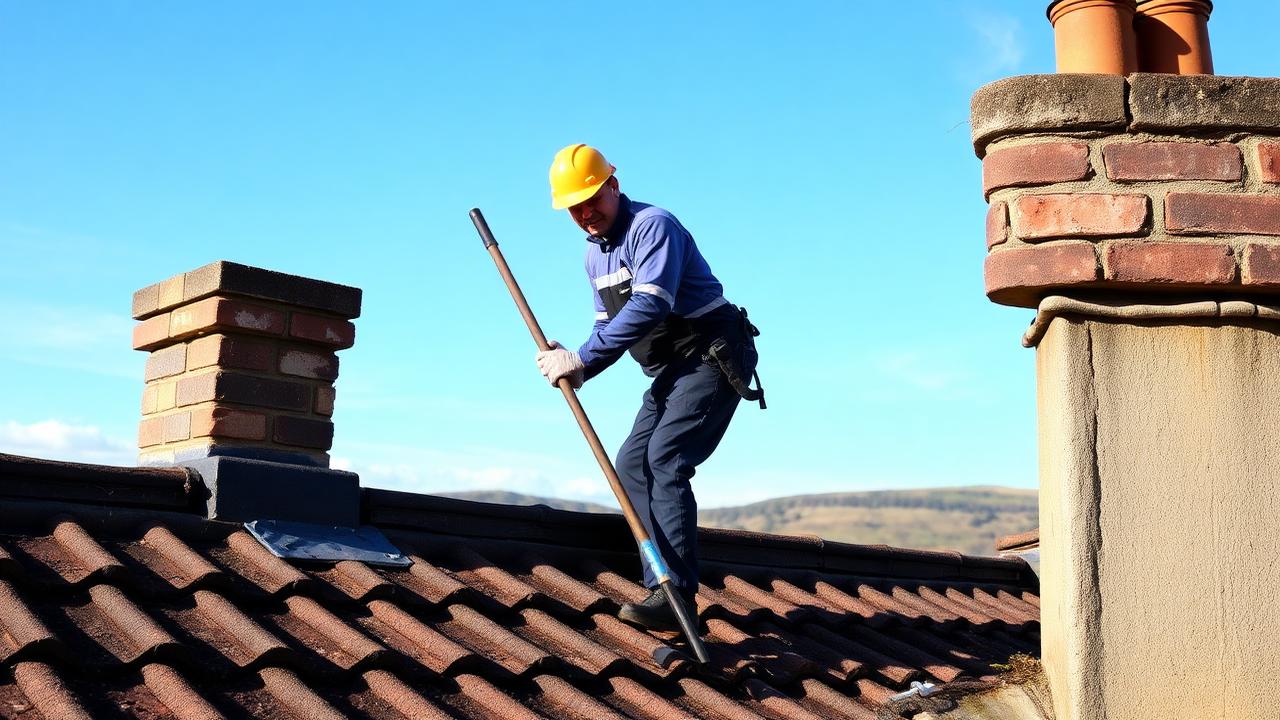
A log burner flue is swept from inside the house, usually by removing the stove's baffle plate so the brush can pass up through the flue collar, or by disconnecting a register plate or soot door where one is fitted. The rods go up the liner or twin wall system to the terminal, the soot is drawn down into a sealed vacuum, and the baffle, rope seals and throat are checked before everything goes back together. You receive a sweeping certificate at the end.
People often search for a flue sweep separately from a chimney sweep, as if they were different trades. They are the same trade applied to a different kind of flue. What changes is access: an open fireplace gives a wide, direct route upward, while a stove narrows everything down to the diameter of its outlet and the flue beyond it.
Why a stove flue behaves differently
A stove burns hotter and more slowly than an open fire, and it is often turned down overnight. Slow, cool burning with damp wood leaves sticky tar rather than dry soot, and that tar collects fastest in the upper part of a liner where the gases have cooled. A brush suited to a masonry chimney can be the wrong size or stiffness for a steel liner, so the sweep chooses heads to match the flue rather than the fireplace.
Twin wall pipe is smooth and insulated, so deposits are usually light, but bends and the rain cap at the top still catch debris. A liner running up an old chimney may have offsets where the original flue changes direction, and those joints are where birds' nesting material or fallen mortar tends to settle.
What happens on the day
The sweep protects the floor and hearth, lets the stove cool fully, then opens it up. With the baffle out, the flue collar is visible and the rods can be fed upward. After sweeping, the debris is removed from the stove body and any soot box, and the baffle and fire bricks are refitted and checked for warping or cracks.
- Stove must be cold; let the fire go out the evening before
- Baffle plate and fire bricks removed and inspected
- Rods and brush sized to the liner or twin wall diameter
- Soot and debris taken out through the stove, not the room
- Door rope and glass seal looked at before reassembly
- Sweeping certificate issued for your records and insurer
What affects the price of a log burner sweep
There is no single figure because the work varies. A stove with a straight, recently fitted liner and a removable baffle is quicker than one with a fixed baffle, a heavy tar lining or an offset in the flue. If the brush meets a blockage, or tar has glazed onto the liner, the job becomes a problem to investigate rather than a routine sweep. We agree the price with you before starting, and if the flue shows something that needs a closer look, we explain the options first.
Booking a stove service at the same visit means the appliance and flue are both dealt with while the stove is already opened up, which saves a second disturbance.
Signs the flue needs sweeping sooner
Glass that blackens within an hour of lighting, a fire that is hard to draw, a smell of tar in warm weather and flakes falling onto the baffle are all worth acting on. Do not keep burning if smoke comes into the room or your carbon monoxide alarm sounds; let the stove go out, ventilate and call for help.
Frequently asked questions
Can a log burner be swept without taking the stove out?
Usually yes. Most stoves are swept through the flue collar after removing the baffle, or through a soot door or register plate. The stove only comes out in unusual cases, such as a very tight fit with no other access.
Is a flue sweep different from a chimney sweep?
It is the same job on a different type of flue. A stove flue is narrower, often steel, and reached through the appliance, so the sweep uses matching brush heads and works through the stove.
Why does my stove flue get tarry?
Tar forms when smoke cools before it leaves the flue, which happens with damp wood and fires kept low for long periods. Dry, seasoned wood and a hotter fire for part of each burn reduce it.
Do I get a certificate after a stove sweep?
Yes. A sweeping certificate is issued after each visit, which is useful for home insurance and for landlords keeping appliance records.
Stove flue due a sweep?
We sweep log burner and multifuel flues and can service the stove on the same visit. Call 07826 049704.