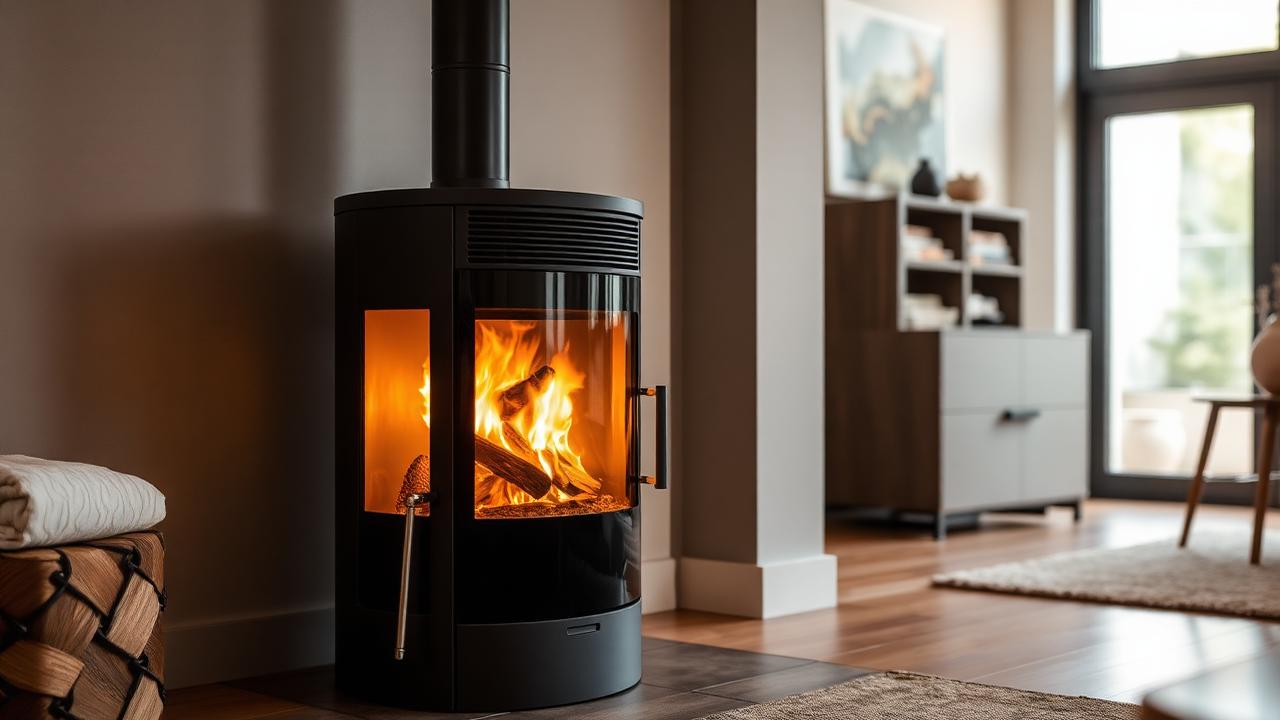
For a wood burning stove in Scotland, start by checking the building standards route with your local council, not by assuming an English installation certificate replaces it. The hearth, flue, ventilation and carbon monoxide alarm must suit the particular room and appliance. A survey establishes what is needed before a stove is ordered.
For an existing fireplace, the first question is whether its flue is sound and suitably sized for the proposed appliance. In a room with no chimney, the route for a new flue changes the work considerably. Discuss that route with the installer and local authority before ordering the stove, especially where external alterations are involved.
Stove InstallationSafety & Compliance
Almost everything written online about stove regulations is written for England and Wales. Scotland runs a separate system, and the difference matters before you book anyone: the paperwork route, the person who signs the job off and the technical standards themselves are set by Scottish building standards, not by the English Approved Document J.
This guide sets out what the standards ask for on a domestic solid fuel appliance in Scotland, in the order it comes up on a real job — the approval route first, then the installation details that get checked, then the parts homeowners routinely get caught out by.
The approval route: building warrants, not self-certification
In England and Wales, an installer registered with a competent person scheme can self-certify a stove installation and notify building control on your behalf. Scotland does not operate that route for solid fuel in the same way. Work that forms or alters a chimney, flue or heat-producing appliance installation generally falls within the building warrant system administered by your local authority — Dundee City, Angus, Fife or Perth & Kinross, according to the local authority for your property.
That does not make HETAS registration irrelevant. It is the evidence that the person doing the work is assessed and competent, and it is what insurers, surveyors and buyers look for later. What changes in Scotland is that the compliance paperwork sits with the local authority process rather than being posted to you by a scheme, so it is worth agreeing at quote stage who is applying for what.
We are HETAS registered installers and we will tell you plainly, before any work is booked, which route your particular job needs and what you will hold at the end of it. Guessing at this stage is what creates problems when a house is sold.
- Ask your council's building standards team about your specific property before work starts
- Confirm in writing who is making any application — you or the installer
- Keep every document together: it is the buyer's solicitor who will ask for it
What the standards check in the installation itself
Whatever the approval route, the physical requirements are the part that keeps a stove safe. They are not arbitrary — each one exists because of a specific failure mode we still see in older installations.
The hearth carries heat and stray embers away from the floor structure, which is why its size and thickness are specified rather than left to taste. Distances to combustibles protect timber studwork, skirtings and beams that char slowly over years before they ignite. Flue size has to suit the appliance: too small and the stove cannot clear its gases, too large and the flue never gets warm enough to draw properly or to stay free of condensing tar.
- A non-combustible hearth of adequate size and thickness under and in front of the appliance
- Manufacturer's clearance distances to combustible walls, beams and floors respected
- A flue sized and lined to suit the specific appliance, not to suit the existing opening
- The flue terminating high enough above the roof to clear pressure zones and draw reliably
- Purpose-provided ventilation where the appliance output or the airtightness of the room requires it
- A carbon monoxide alarm sited correctly in the same room as the appliance
The two things homeowners get caught out by
The first is ventilation. Houses have been sealed up steadily over the last twenty years — new windows, insulated floors, draught excluders, powerful kitchen extractors. A stove competes with all of that for the air it needs. A room that suited an open fire in 1970 may not supply a modern stove today, and the symptom is a fire that sulks, smokes back when a fan is running, or blackens its own glass.
The second is the existing chimney. A masonry flue built for an open fire is usually oversized and often unlined. Drop an efficient modern stove into it and the cooler flue gases condense on the way up, producing tar and, in older stacks, damp staining on the chimney breast. This is why a survey precedes any installation we quote: what the chimney needs is not a detail to settle on installation day.
Existing stoves and older installations
The regulations bite when work is carried out. An appliance that was installed legitimately years ago is not made unlawful by later changes to the standards. What matters for an existing stove is whether it is currently safe: a sound flue, correct clearances, an adequate hearth, working ventilation and a functioning carbon monoxide alarm.
If you have inherited a stove with a house and no paperwork, the sensible first step is a sweep with a CCTV survey. That tells you the condition of the flue and gives you a dated sweeping certificate for your file, which is what an insurer will ask for regardless of how old the installation is.
Why compliance is worth more than the inspection
It is easy to treat regulation as a hurdle. In practice, every requirement above maps onto something that goes wrong in houses we visit: hearths that have scorched a floor, beams charred behind a plaster reveal, oversized flues tarring up in a single winter, stoves starved of air and smoking into rooms with no alarm fitted.
The compliant installation is also the one that works. A correctly sized, correctly lined flue draws well, burns clean, needs sweeping less often and does not deposit tar down the chimney breast. Compliance and performance are the same conversation.
Frequently asked questions
Do I need a building warrant to install a wood burning stove in Scotland?
Solid fuel appliance and flue work generally falls within the building warrant system in Scotland rather than the self-certification route used in England and Wales. Because it depends on the specific work and property, check with your local authority's building standards team, and agree with your installer at quote stage who is applying.
Is a HETAS registered installer still required in Scotland?
HETAS registration is not a substitute for the Scottish approval route, but it is the recognised evidence that the installer is assessed as competent on solid fuel work. We are HETAS registered installers, and that is what surveyors and insurers look for when a property changes hands.
Does my chimney have to be lined?
Not automatically. It depends on the condition, size and construction of the existing flue and on the appliance being fitted. An oversized or unsound masonry flue serving a modern efficient stove usually does need an appropriately sized liner, which is what a survey establishes before quoting.
Do I need an air vent in the room?
It depends on the appliance output and how airtight the room is. Purpose-provided ventilation is assessed as part of the installation survey, and it can be retro-fitted where a room has been sealed up since an existing stove went in.
What happens if a previous owner fitted a stove without approval?
You cannot retrospectively change how the work was notified, but you can establish whether it is safe. A sweep and CCTV survey documents the current condition of the flue and gives you a dated certificate, which is usually what a buyer's solicitor or an insurer actually wants to see.
Does HETAS registration replace Scottish building standards?
No. Ask your local authority which Scottish building standards process applies to your proposed installation; HETAS registration does not replace that decision.
Planning a stove this winter? Start with a survey
We survey the chimney, size the flue and set out the compliance route in plain terms before anything is booked. Call 07826 049704.