Comparisons & Choices
This question usually arrives because one installer has quoted for a liner and another has not. Both cannot be right, and the answer is not a matter of opinion. It comes down to what the flue is, what size it is and what condition it is in.
Here is the reasoning we use, so you can apply it to whatever quotes you are holding.
Reason one: the flue is too big
Old chimneys were built for open fires, which send enormous volumes of hot gas upwards. A modern stove is far more efficient, so much less heat goes up the flue.
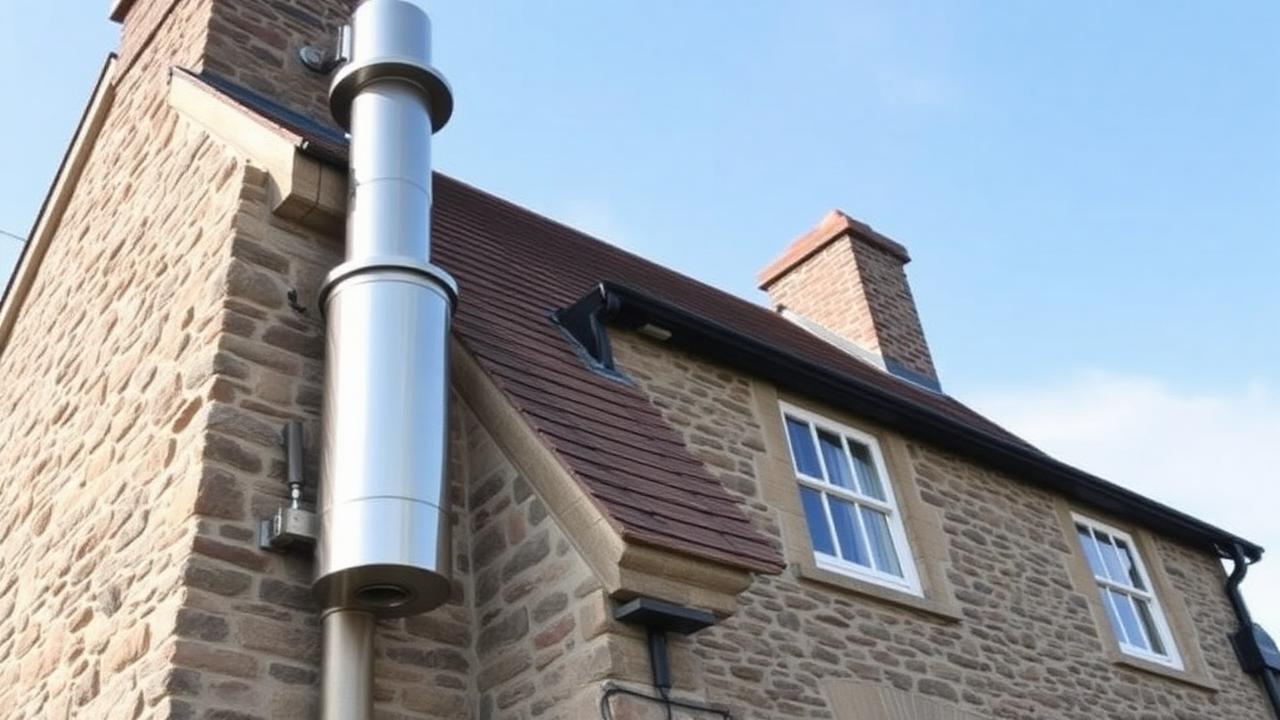
Put a modern appliance on a large old flue and the gases cool before they reach the top, the draw weakens and condensation forms inside the stack. Lining reduces the flue to a diameter matched to the appliance, which keeps the gases hot and moving.
Reason two: the flue is not gas tight
Century-old lime mortar joints, missing parging and cracks between adjoining flues all allow gases to move into the building fabric rather than out of the top. In a shared stack that can mean fumes appearing in a neighbour's room.
A liner is a continuous sealed route from the appliance to the terminal, which removes that risk entirely.
When lining genuinely is not needed
A chimney with a sound, correctly sized clay or concrete liner already in place, passing a smoke test, serving an appropriately matched appliance, may not need relining at all.
We say so when we find it. A quote that specifies a liner on every property regardless of what is there is not surveying, it is guessing in an expensive direction.
What happens if it is skipped when it was needed
Poor draw, smoke spillage, rapid tar build-up, staining on chimney breasts and, in the worst cases, combustion gases entering rooms. Retrofitting the liner afterwards costs more than doing it during the installation, because the appliance and register plate have to come out again.
Frequently asked questions
How does an installer decide?
By inspecting the flue, measuring it, checking construction and condition, and smoke testing for soundness. A camera survey adds certainty where the flue is old or its history is unknown.
Is lining a legal requirement?
The installation must comply with Building Standards and the flue must be suitable for the appliance. Lining is the usual means of achieving that on an old flue rather than a rule in itself.
Flexible or rigid liner?
Flexible stainless is standard for most domestic retrofits because it negotiates bends in existing stacks. Rigid systems suit new build-ups and specific applications, and we will explain which your property calls for.
Can a liner be fitted later?
Yes, but it means disturbing the installation you have already paid for. It is materially cheaper to line during the original installation if the survey says it is needed.
Does a lined flue still need sweeping?
Absolutely. Liners deposit soot and tar just as masonry does, and sweeping a liner also protects your investment in it. Annual sweeping is often a condition of the liner warranty.
Find out where your flue stands
A free survey and, where the flue is old, a camera check will tell you plainly whether lining is needed. We would rather tell you it is not.