Comparisons & Choices
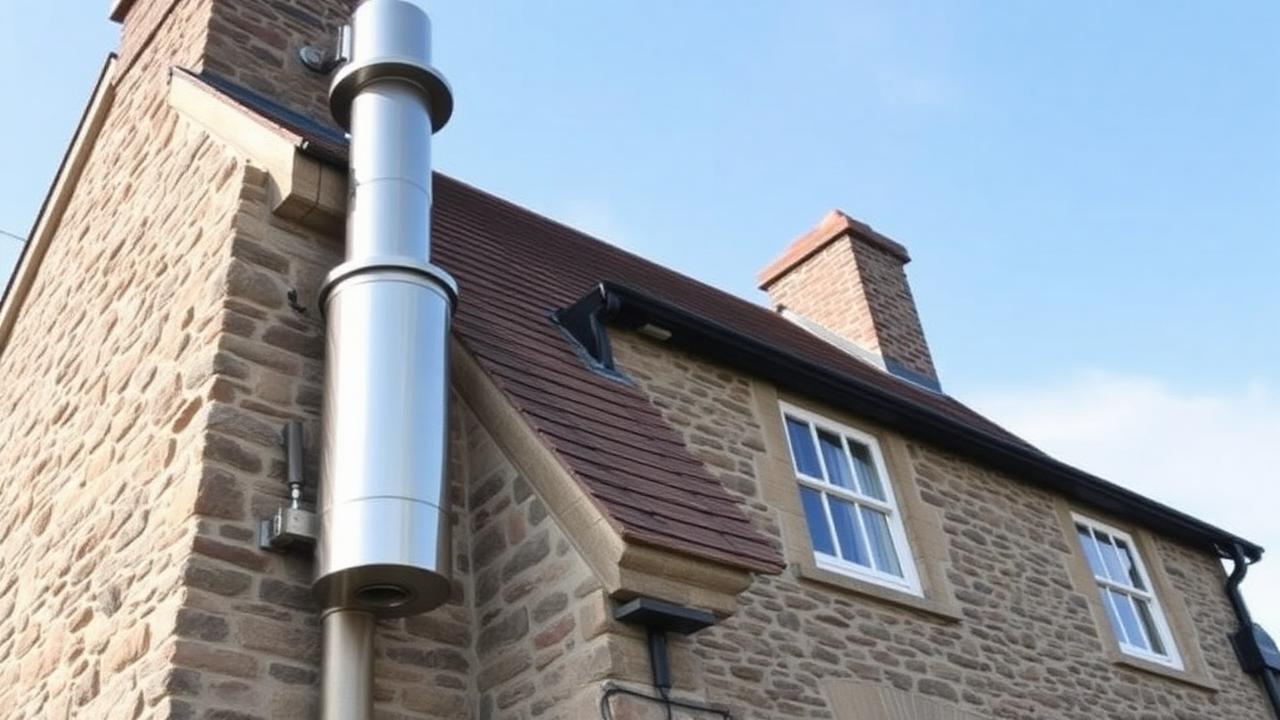
A chimney is the whole structure, usually a masonry stack with its breast inside the house, pots on top and a fireplace at the bottom. The flue is the passage inside it that carries smoke and gases out. One chimney stack can hold several flues, one for each fireplace. And you can have a flue with no chimney at all: a twin wall system is a self-contained flue that runs through a wall or roof.
The difference matters when you read a quote or a survey. A report saying the chimney is sound but the flue is not usually means the brickwork is fine but the passage inside is cracked, oversized or leaking, which is a job for a liner rather than a builder.
The parts of a traditional chimney
Starting from the room: the fireplace opening, the throat above it where the flue narrows, the flue itself running up through the breast, and the stack above the roof finished with pots and flashing. In Scottish tenements and older houses the stack often contains many flues side by side, separated by thin brick or stone walls called withes.
- Stack: the visible masonry above the roof
- Breast: the part of the chimney inside the room
- Flue: the passage the smoke travels up
- Withe: the wall between neighbouring flues
- Pot and cowl: the terminal on top
Where liners come in
Old flues were built for open fires and are often large and rough. A stove produces a smaller volume of cooler gas, which can struggle in a big flue and condense into tar. A flexible steel liner runs inside the old flue to give a smooth, correctly sized passage and to seal cracks. So when people talk about lining a chimney, they are really fitting a new flue inside the old one.
Flues without a chimney
Twin wall flue is insulated stainless steel pipe that works as a complete flue on its own. It lets a stove go in a room that never had a fireplace, or a garden room or extension. It still needs the correct height, clearances from combustible materials and a proper terminal, just as a masonry chimney would.
Which one needs attention?
Brickwork, pointing, flashing and pots are chimney issues and usually show from outside as damp, crumbling mortar or leaks. Draw problems, smoke spillage and tar are flue issues. A camera survey looks inside the flue, while a sweep keeps it clear. If you are unsure which part is at fault, start with a sweep and survey before booking any building work.
Words you may see on a quote or survey
A few more terms turn up regularly. The register plate is the sealed plate that closes off the fireplace throat above a stove, with the flue pipe passing through it. The flue collar is the outlet on top or at the back of the stove. The terminal is whatever finishes the flue at the top, whether a pot, a cowl or a twin wall cap. An offset is a bend where the flue changes direction, common in older chimneys and a frequent place for soot to gather.
If a quote lists work on any of these, ask which part of the system it relates to and why. A good installer or sweep will happily explain whether they are dealing with the structure of the chimney, the passage inside it or the appliance connection, and that makes it much easier to compare quotes on a like for like basis.
Frequently asked questions
Is a flue the same as a chimney?
No. The chimney is the structure; the flue is the passage inside it that carries smoke away. A chimney can contain several flues.
Can you have a flue without a chimney?
Yes. A twin wall flue system is a complete, insulated flue that can run through a wall or roof where there is no chimney.
What is a chimney liner?
A liner is a new flue fitted inside an existing chimney, usually flexible stainless steel, giving a smooth, sealed and correctly sized route for the gases.
Who checks the inside of a flue?
A chimney sweep clears it and a CCTV camera survey shows its condition, including cracks, gaps and blockages.
Not sure whether it is the chimney or the flue?
A sweep and camera survey will show you. Call 07826 049704.