Comparisons & Choices
People often use these terms interchangeably, but they are different products solving different problems. Knowing which one your property needs makes quotes far easier to compare.
Chimney liners: for properties with an existing stack
A liner is a flexible or rigid stainless steel tube dropped down an existing masonry chimney and connected to the appliance below and the pot above. It gives a smooth, correctly sized, gas-tight pathway inside a structure that was probably built for an open fire rather than a modern efficient stove.
It is the right answer when the chimney is structurally sound but the flue is oversized for the appliance, the parging has failed, there is any risk of gas leakage into adjoining rooms or flues, or the existing liner has corroded. Insulating around the liner keeps flue gases hotter, which improves draw and reduces tar — particularly worthwhile on external walls.
Twin wall systems: for properties with no chimney
A twin wall system is a purpose-built insulated stainless chimney assembled from sections. Two skins with insulation between them keep the flue gases hot along the whole route, which is what makes it work as a standalone chimney.
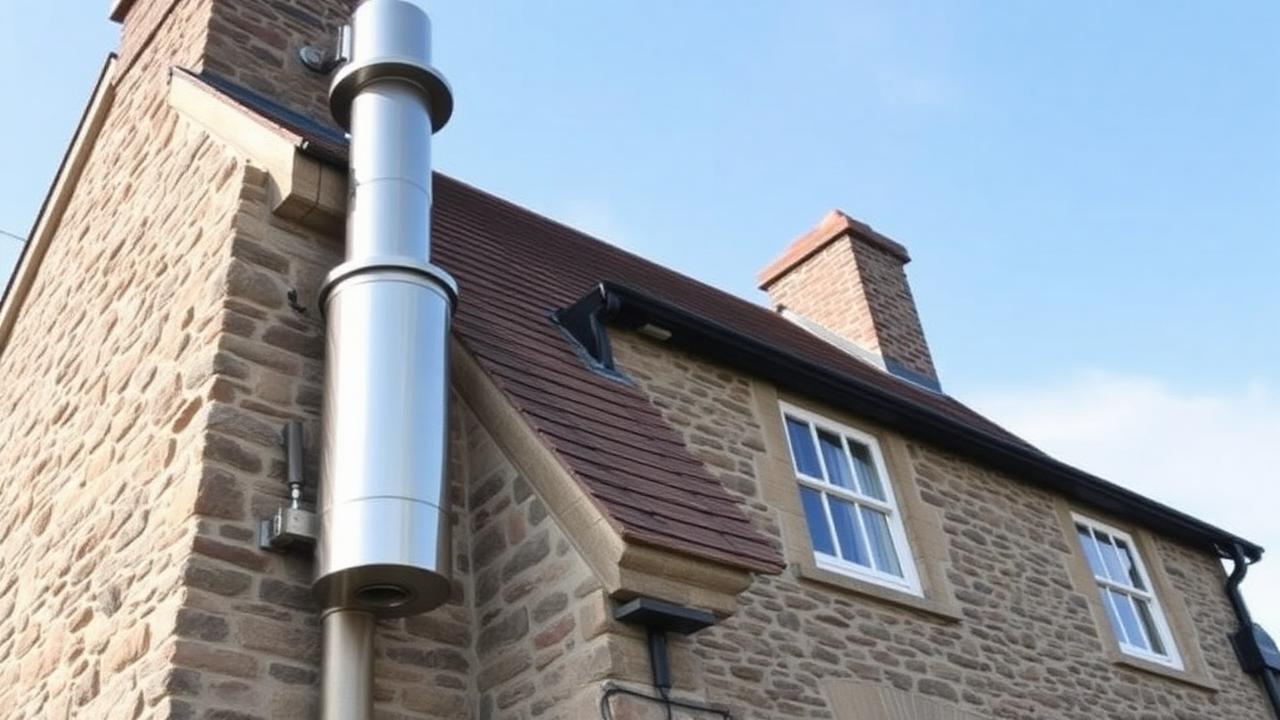
It can run internally — up through the ceilings and out at the ridge, which is thermally the better option — or externally, out through the wall and up the gable, which is less disruptive inside. Either way the height and termination position have to satisfy the clearance rules relative to the roof, which is a survey question rather than a catalogue one.
The overlap cases
Occasionally a property has a chimney that cannot practically be lined — a collapsed flue, a route with impossible bends, or a stack that is structurally unsound. In those cases a twin wall system alongside or through the existing structure is the workable answer, and the old flue is capped and ventilated.
The reverse also happens: people assume they need an expensive twin wall system when a blocked-up chimney behind the plaster can be opened, swept, surveyed and lined for less.
What drives the cost of each
For liners, the length of the flue, its diameter, whether insulation is backfilled, the number of bends and the access arrangements for the roof are what move the number. For twin wall, it is the total height of the system, the number of components, whether the route is internal or external, and roof or wall penetration work.
Neither is sensibly quoted from a phone call. A survey takes half an hour and produces a number that will not change afterwards.
Frequently asked questions
Do I definitely need a liner for a new stove?
Not automatically, but frequently. If the existing flue is sound, correctly sized and passes a camera survey and smoke test, lining may not be required. In older Scottish properties with large open-fire flues, lining is usually the right call for both draw and safety.
Is external twin wall ugly?
It is visible, though modern black powder-coated systems sit reasonably discreetly against most walls. In conservation areas and on listed buildings there may be restrictions on external flues, which we identify at survey.
How long does a stainless liner last?
It depends on grade, fuel and how the stove is run. Higher-grade liners suit mineral fuels and their more acidic condensates. Regular sweeping and burning dry fuel extends liner life considerably.
Can twin wall go through a bedroom?
It can pass through intermediate floors with the correct fire stops and clearances to combustibles, which is exactly the detail that makes it a job for a registered installer rather than a general builder.
Find out which system your property needs
A free survey will establish whether you have a usable chimney or need a new flue route.