Allow around an hour for one reasonably maintained domestic chimney, including protecting the room, sweeping, checking the flue and clearing away. The actual brushing is only part of the visit. More flues, stubborn deposits, a nest or difficult access can extend it; tell the sweep about these when booking so the right time is reserved.
Before booking, count the separate flues rather than the number of fireplaces: two appliances may need separate attention even in one stack. Let the sweep know if the fire has not been used recently or if soot has started falling into the hearth. These details help distinguish a routine visit from one that may need an inspection.
Chimney SweepingCosts & Process
People ask this for a practical reason: they are deciding whether to take a morning off work, fit us around a school run, or leave a key with a neighbour. It deserves a straight answer rather than a marketing one.
For a single, reasonably maintained domestic flue, allow around an hour from arriving to leaving. That is not an hour of brushing — a good proportion of it is protecting the room, setting up, inspecting, testing and clearing away properly. Below is where the time actually goes, and what pushes an appointment past that.
Where the time goes on a typical visit
The sweeping itself is the shortest part. Sheeting the hearth and surroundings, sealing the opening, setting up extraction and then, at the end, checking the deposits, running a smoke draw test and leaving the room as we found it are what fill the hour.
That preparation is not padding. It is the difference between a clean job and soot on a carpet, and it is why an appointment that looks quick from outside takes the time it does.
- Set up: sheeting, sealing the appliance opening, extraction — around fifteen minutes
- Sweeping the flue with the correct heads for its construction — fifteen to twenty-five minutes
- Inspection of deposits, appliance, baffle, rope seals and terminal
- Draw test to confirm the flue clears properly after sweeping
- Clearing away, then issuing the certificate
How the chimney is actually cleaned
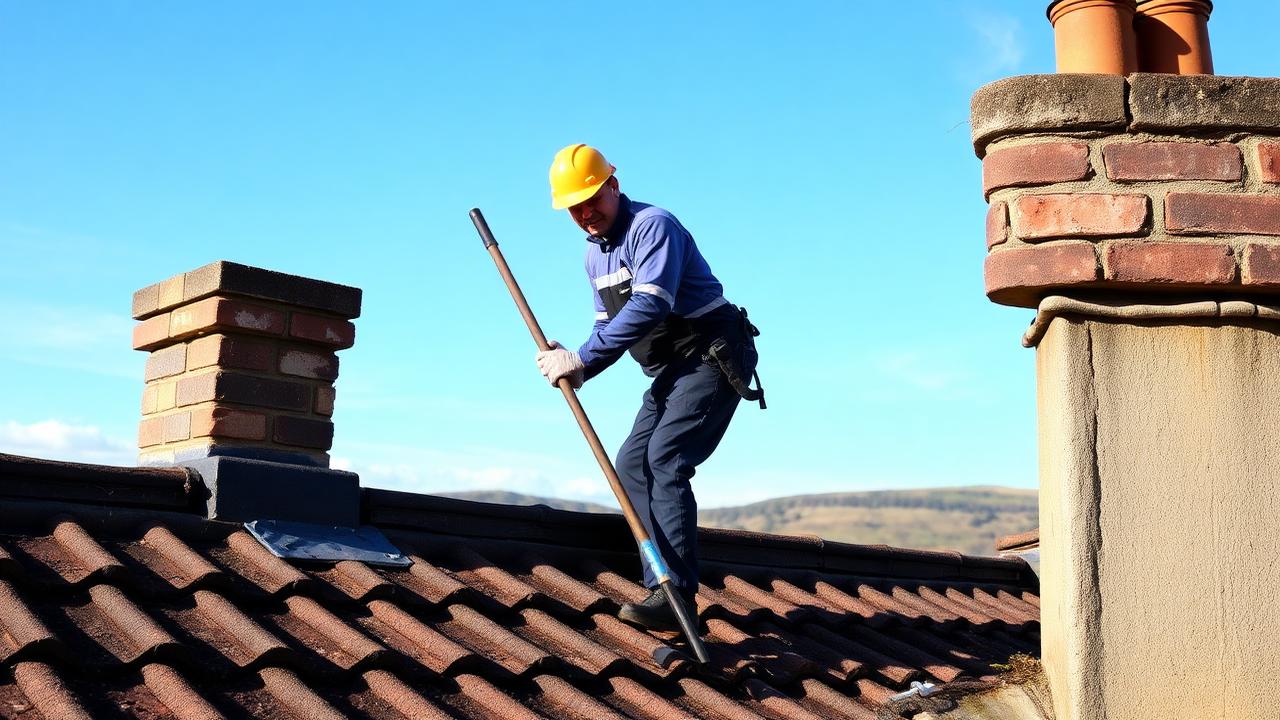
We protect the floor, contain the fireplace opening and use vacuum extraction before starting on the flue. Rods and brushes suited to that flue are worked through its length; where deposits need more attention, power sweeping may be appropriate. Soot and debris are contained and removed rather than left in the fireplace.
The sweep then checks what came down and whether the flue draws properly. A camera survey is a separate step when something about its condition needs investigation. The related guide on what happens during a chimney sweep gives the fuller start-to-finish account. This is why the time spent covering and checking the room is not an optional extra to the brushing.
What makes an appointment take longer
Condition is the main variable. A flue swept every year gives up its soot quickly. A flue that has not been touched for five seasons, or that has been fed damp wood, holds hardened tar that has to be worked at rather than brushed off. Heavy glazed deposits are a different job again and may need a separate specialist visit rather than being forced into the same hour.
Access is the second. An inglenook with a wide gather, a stove with a baffle that has to come out and go back, a flue with several bends, a roof terminal needing checking from above — each adds time. So does anything unexpected: a nest, fallen mortar, a damaged liner found on camera.
- Years since the last sweep, and what has been burnt in the meantime
- Tar or glazed creosote rather than dry soot
- Removing and refitting a stove baffle and throat plate
- Multiple bends, an offset gather or an unlined masonry flue
- Unexpected finds — nests, debris, liner damage
Multiple flues in one property
Second and subsequent flues in the same visit are quicker than the first, because the set-up, the travel and the paperwork are already done. If you have a stove downstairs and an open fire in a bedroom, having both swept on one appointment is more efficient than two visits.
It is worth telling us up front how many flues you want done. It changes the slot we book rather than the price of a surprise, and it means the day runs to time for you and for the customers after you.
How to make the visit run to time
A few minutes of preparation genuinely shortens the appointment. Let the fire go completely out well in advance — a flue still warm from last night's burn cannot be swept safely, and that is the single most common cause of a wasted visit.
Clear the hearth and the space in front of it. Move ornaments, rugs, screens, log baskets and anything fragile out of the room. If the stove has a removable baffle, having the manual to hand helps if it is an unfamiliar model.
- No fire for at least twenty-four hours before the appointment
- Hearth and the area in front of it cleared
- Rugs, ornaments and log baskets moved out of the room
- Parking reasonably close if the property is on a narrow street
- Tell us in advance about extra flues, a stove baffle, or an unusual set-up
When a sweep turns into a survey
Occasionally something found during a sweep warrants a proper look with a camera — a suspected crack, a liner that feels wrong on the rods, a deposit pattern that suggests condensation. A CCTV survey is a separate piece of work and adds meaningful time.
We will not do that quietly and add it to the bill. You will be told what has been found, what a survey would establish, and what it costs before anything else happens.
Frequently asked questions
How long does a chimney sweep take?
Allow around an hour for a single, reasonably maintained domestic flue. That includes protecting the room, sweeping, inspecting, draw testing and clearing away — not an hour of brushing.
How do chimney sweeps clean chimneys?
The fireplace is protected and sealed, then suitable rods and brushes are worked through the flue with extraction collecting the deposits. The sweep checks what was removed and tests the draw before clearing away. Extra investigation, such as a camera survey, depends on what is found.
Why would it take longer than that?
Years of missed sweeps, tar from damp wood, a stove baffle that has to come out, multiple bends, an unlined masonry flue, or something unexpected like a nest or fallen mortar.
Can two flues be done in one appointment?
Yes, and it is more efficient than two visits. Tell us how many flues when booking so the right slot is allocated.
Is it messy?
It should not be. Sheeting, a sealed opening and extraction keep the soot contained, which is precisely why the set-up takes as long as it does.
When do I get the certificate?
It is issued after the sweep as standard and emailed to you, so there is a digital copy that survives a house move.
Does the sweeping time include checking and clearing away?
Allow time for protecting the room, sweeping, checking the flue and clearing away. The time spent with rods in the chimney is only part of the visit.
Book a sweep before the season fills up
Autumn and winter are our busiest weeks. Call 07826 049704 and we will find you a slot that suits.