A solid fuel back boiler can need both its flue swept and its appliance gas passages cleaned. Soot on the heat exchanger can reduce the heat reaching the water. The water-side pumps, valves and pipework are a heating engineer's work, not part of chimney sweeping.
When booking, say whether the boiler is behind an open fire or connected to a stove, and mention any changes in draw or smoke. The sweep can then discuss access to the flue and appliance passages. Do not treat clearing soot as an assessment of pumps, plumbing or the boiler's water circuit.
Stove ServicingCosts & Process
Solid fuel boilers and boiler stoves are still common in rural Scottish properties — cottages, farmhouses and older houses off the gas network where the fire heats water and radiators as well as the room. They are also the appliances people most often assume a sweep cannot help with.
In fact they need more attention than a plain stove, not less, and the reason is straightforward physics: a boiler deliberately pulls heat out of the flue gases, which cools them, and cooler gases deposit more.
Why boiler appliances soot up faster
In a room-heater stove, most of the heat goes into the room and the flue gases leave hot. In a boiler appliance, a water jacket or heat exchanger sits in the gas path specifically to strip heat out of it. That is the whole point — but the consequence is a cooler gas stream by the time it reaches the flue.
Cooler gases carry less soot in suspension and condense their volatiles sooner. So the narrow passages around the heat exchanger fur up, and the flue above collects deposits at a greater rate than an equivalent dry stove would.
What actually gets cleaned
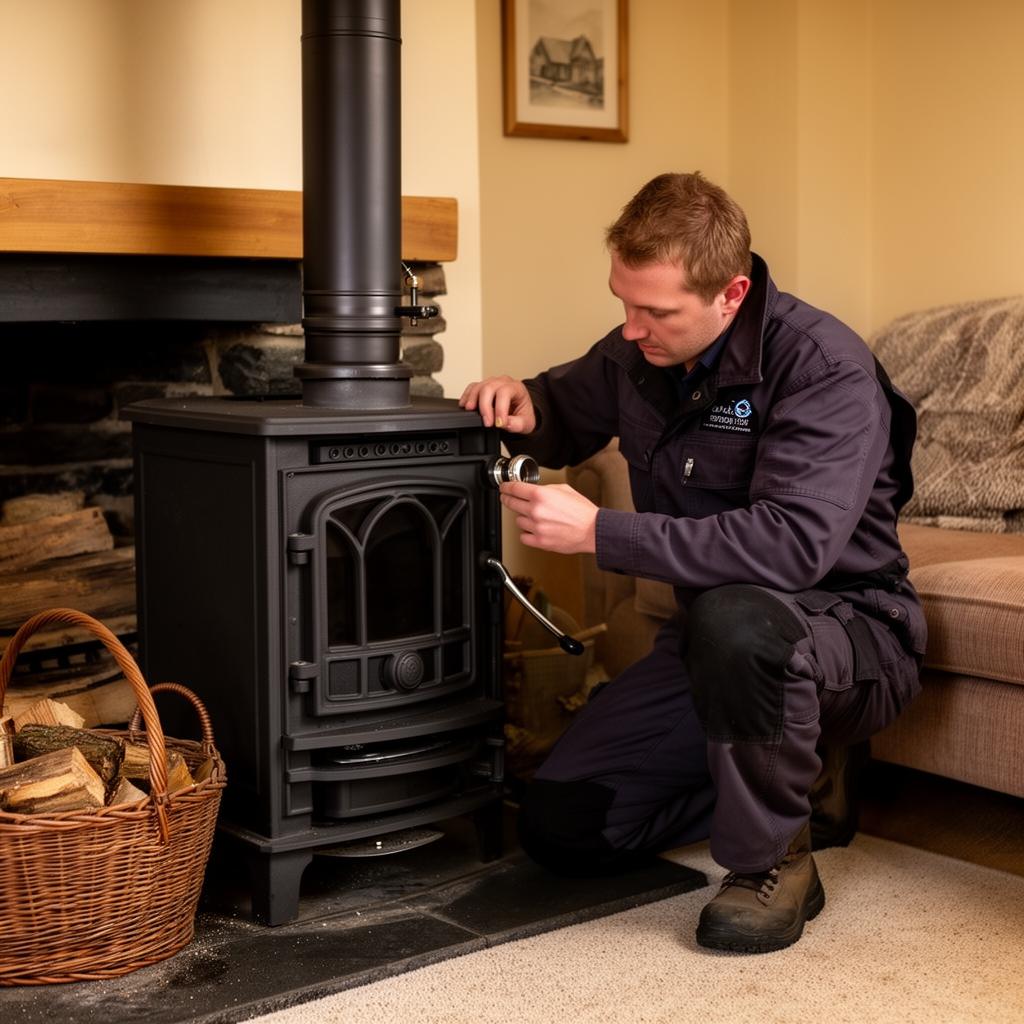
Two distinct things. The flue is swept in the normal way, with heads matched to its construction. Separately, the appliance's own internal gas passages — the ways around the boiler and heat exchanger — are cleared with brushes and scrapers designed for the purpose.
That second part is where the performance is. A layer of soot on a heat exchanger is an insulator. It sits between the fire and the water and stops heat crossing, so the appliance burns the same fuel and delivers less hot water and cooler radiators. Owners usually describe this as the boiler 'not being what it was' rather than as a maintenance issue.
- Flue swept and inspected for its full length
- Boiler gas passages and heat exchanger surfaces cleared
- Baffles and throat plates removed, cleaned and refitted
- Grate, ashpan and riddling mechanism checked
- Rope seals on doors checked, as air leaks change how the appliance burns
- Flue draw tested after cleaning
The signs it is overdue
The symptoms show up on the water side before they show up in the room. Radiators take longer to come up. Hot water runs out sooner than it used to. The fire seems to burn fine but the heating performance has drifted downward across a season — and because it happens gradually, households adapt without registering it.
Other signs point at the flue rather than the exchanger: a sluggish fire, smoke spilling on opening the door, or heavier ash and soot fall than usual.
Frequency, and the case for doing it before winter
A boiler appliance that runs daily through a Scottish winter is working far harder than a stove lit at weekends. Appliances in constant use are generally swept more frequently than once a year, and the manufacturer's instructions for your model are the right starting point.
The seasonal argument is practical. A boiler cleaned in early autumn spends the whole heating season working properly. One cleaned in February has spent the coldest months burning extra fuel to deliver less heat, which costs more than the visit did.
What a sweep does not cover
It is worth being clear about the boundary. Sweeping and cleaning the appliance's gas side is our work. The water side of the system — pumps, valves, the vessel, pressure and pipework — is a heating engineer's. If a survey shows something wrong on that side, you will be told so plainly rather than have it worked around.
Carbon monoxide safety applies with particular force to these appliances. An alarm should be fitted in the room with the appliance, and any spillage of smoke into the room means the appliance stops being used until the flue has been checked.
Frequently asked questions
What does a chimney sweep do on a boiler?
Sweeps the flue in the normal way and, separately, clears the appliance's internal gas passages and heat exchanger surfaces. Both soot up, and cleaning only the flue leaves the performance problem untouched.
Why has my back boiler stopped heating properly?
Soot on the heat exchanger acts as insulation between the fire and the water, so the same fuel delivers less heat. It is one of the most common causes of a boiler that has gradually become disappointing.
How often should a solid fuel boiler be swept?
More often than a room-heater stove used occasionally, because it runs harder and its gases run cooler. Follow the manufacturer's instructions for your appliance, and expect an appliance in daily winter use to need attention more than once a year.
Do you service the heating system as well?
No. We deal with the flue and the appliance's gas side. Pumps, valves, pressure and pipework are a heating engineer's work, and we will say so if that is where the problem sits.
Can this be done at the same time as the chimney?
Yes — it is the same visit. The flue and the appliance are cleaned together, and the sweeping certificate is issued afterwards.
Will a chimney sweep check the back boiler's pipework?
No. Sweeping addresses the flue and relevant combustion passages; a heating engineer handles the water-side system.
Get the boiler cleaned before the cold sets in
A clean heat exchanger means the fuel you are already buying actually heats the house. Call 07826 049704.