Problems & Repairs
If crows are nesting in your chimney, they are almost certainly jackdaws: small grey-naped members of the crow family that naturally nest in holes and treat an open chimney pot as a ready-made cavity. They drop sticks down the flue until one wedges, then build on top, and they return to the same site year after year. The lasting fix is a properly fitted bird guard or cowl once the nest is empty, not scarers or noise.
Why jackdaws like chimneys
In the wild, jackdaws use holes in trees, cliffs and old buildings. A chimney pot offers the same thing with extra shelter and warmth from the house below. They are sociable birds, so one pair on a street often means several, and a row of unguarded pots can host a small colony.
Their building method is what causes trouble. Because the flue is vertical, they keep dropping sticks until enough jam across a bend or ledge to form a base. By the time the nest is finished there can be a large plug of twigs, wool, mud and droppings sitting in the flue, sometimes well above what you can see from the fireplace.
Signs you have jackdaws rather than a single bird
Look for sticks appearing in the grate in early spring, loud chattering calls around the roof, and pairs landing on the same pot repeatedly. A single trapped pigeon or starling behaves differently: it flutters and scratches, but there is no steady supply of nest material.
- Twigs and debris landing in the fireplace in spring
- Short, sharp calls from the roofline in pairs or groups
- Birds sitting on the pot rather than just passing
- Smoke drawing badly once the season starts
Why scarers and quick fixes fail
Jackdaws are clever and quickly learn that a plastic owl or spinning device is harmless. Netting over a pot can trap birds and can be dangerous on a flue in use. Stuffing the pot from above is worse still: it blocks ventilation and the flue, and may breach the rules protecting active nests.
The protection that applies to nests in use means timing matters. Once the young have left, the nest can be cleared and the pot secured before the birds come back.
What keeps them out for good
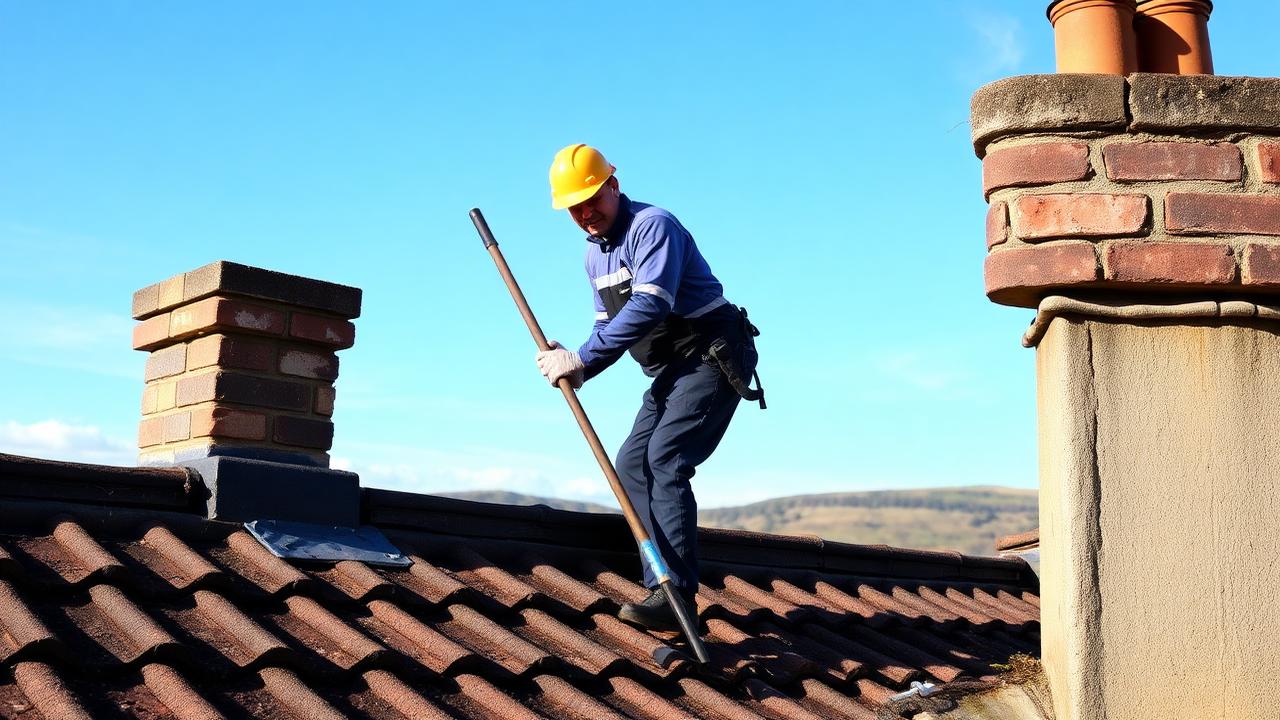
A mesh bird guard, or a cowl with a built-in guard, sized to the pot and suitable for the fuel you burn. For a working stove or open fire, the guard must not choke the flue or collect tar; for a disused flue, a ventilated cap is often better. We sweep the flue after the nest comes out and can check the whole run with a camera so nothing is left behind.
Living with jackdaws nearby
Guarding your own pots does not remove jackdaws from the neighbourhood; it simply sends them elsewhere. If neighbouring chimneys in a terrace or tenement are open, the birds will keep nesting close by, and their noise and droppings on the roof will continue. Where several homes share a problem, it can be worth arranging guards for all the affected pots at once, outside the nesting season, so the colony moves on rather than shuffling along the street.
Keep an eye on the guard over the years. Mesh can be bent by weather or pecked at, and on a working flue it should be checked at each sweep so soot or tar does not build up on it. A guard that is clear and secure is what keeps the flue working and the birds out.
Frequently asked questions
Are the crows in my chimney really jackdaws?
Almost always. Jackdaws are the member of the crow family that nests in holes and cavities, which makes chimney pots attractive to them.
Will jackdaws come back next year?
Very likely. They return to known nest sites, so an unguarded pot that was used once is likely to be used again.
Can I just block the chimney pot?
Not while a nest is active, and never on a flue that serves an appliance. A proper guard or ventilated cap fitted outside the nesting season is the safe way to do it.
Do bird scarers work on jackdaws?
Rarely for long. They soon learn scarers are harmless. A physical guard on the pot is the reliable solution.
Jackdaws back again?
We clear nests once the birds have gone, sweep the flue and fit a guard or cowl. Call 07826 049704.