Problems & Repairs
An unused chimney in spring is, from a jackdaw's point of view, a sheltered vertical shaft with a ledge at the bottom. They are extraordinarily persistent about it, and a stack that has been nested once will be nested again unless something changes at the top.
This guide is in the order the problem actually arrives: how you know you have birds, what you may and may not do about an active nest, how nests are cleared once it is lawful, and how to make sure it does not happen again next April.
Recognising a nest before it becomes a blockage
The obvious sign is noise — scratching, scrabbling and calling from inside the chimney breast, loudest in the early morning. Debris follows: twigs, straw and dropped material appearing in the hearth or on the stove's baffle plate.
The dangerous sign is the one that arrives in autumn, months after the birds have gone. A stove that drew perfectly in spring spills smoke back into the room on the first fire of the season. That step change over a summer is a nest almost every time. Jackdaws build deep — a stack can accumulate a metre or more of packed twigs — and a chimney that is blocked at the top vents combustion gases, including carbon monoxide, into your house instead.
- Scratching or calling from inside the chimney breast
- Twigs and nesting material in the hearth or on the baffle
- A sudden loss of draw after a summer of not using the fire
- Smoke spilling into the room on first lighting in autumn
The legal position on an active nest
Wild birds, their nests while in use or being built, and their eggs are protected. That means an occupied nest cannot simply be pulled out because it is inconvenient, and this is not a technicality — it is the main reason we ask when the noise started before booking a visit.
In practice this means the appliance stops being used until the nest can lawfully be cleared. Do not light a fire to drive the birds out. It does not work, it is cruel, and burning a nest in a flue is one of the more reliable ways to start a chimney fire.
Once the nest is genuinely no longer in use, it can be removed and the flue swept clear. If you are unsure about the status of a nest, your local council or SSPCA can advise, and we would rather you asked than guessed.
How a nest is actually cleared
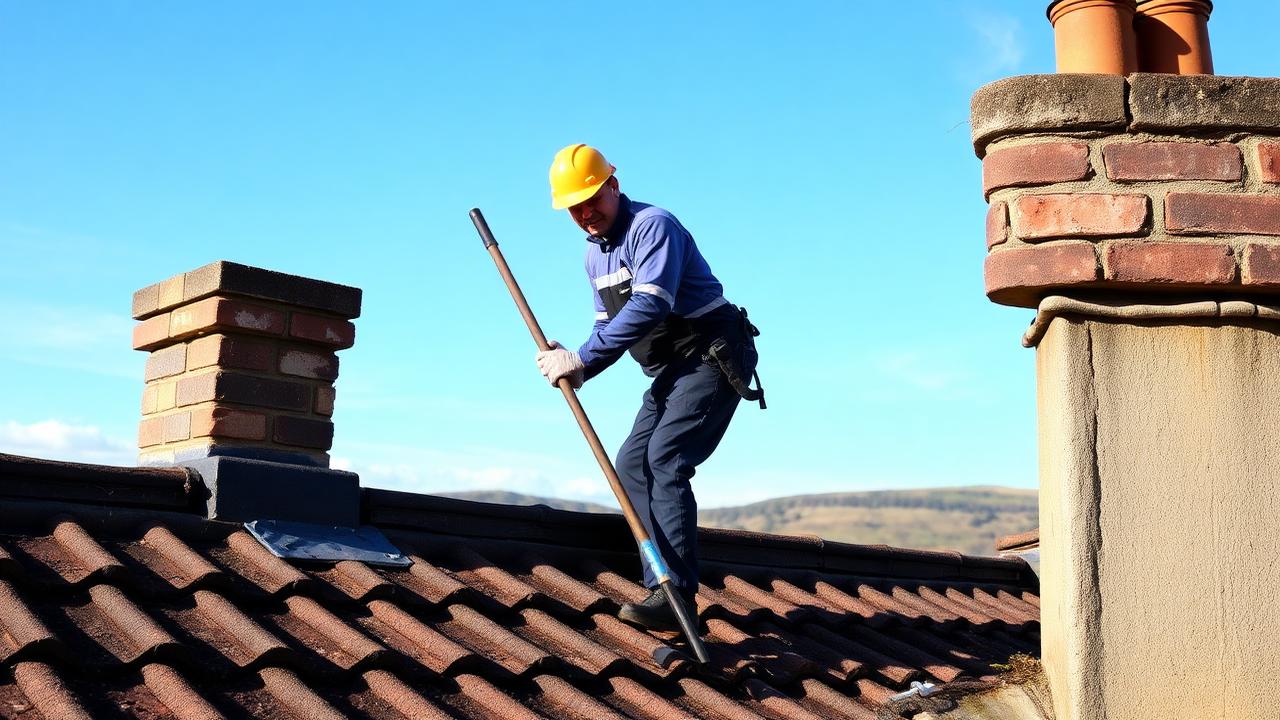
Nest removal is not routine sweeping. The material is bulky, interlocked and often wedged tight against a bend, and it has usually collected soot and fallen mortar along with it. It comes out with specialist rods and heads working from below, sometimes with access from the top of the stack.
A camera inspection afterwards matters more than usual here. Nests conceal what they have been sitting against — displaced pots, damaged parging, gaps in an old liner — and it is worth knowing about that before you rely on the flue for the winter. Once the flue is verified clear, the appliance can be brought back into use.
Prevention: the right cowl, fitted properly
The permanent answer is a bird guard or cowl on the chimney pot. It sounds trivial and it is the single most cost-effective thing an owner of an intermittently used chimney can do — the cost of one is a fraction of clearing a nest, and it does not have to be done twice.
The specification matters. A guard has to have apertures small enough to exclude jackdaws, be made of a material that survives flue gas and Scottish weather, and be genuinely fixed rather than balanced on the pot. Cheap mesh caps rust through, blow off, or clog with soot and cause the very draw problem you were trying to avoid.
Timing matters too. Fit before the nesting season, not during it — a guard fitted over an occupied nest traps birds inside the stack.
- Fit a properly specified bird guard sized to exclude jackdaws
- Have it fixed to the pot, not resting on it
- Fit outside the nesting season
- Combine with an anti-downdraught terminal if the stack is exposed
- Inspect the guard at each annual sweep — they clog with soot over time
Disused chimneys need this most
The chimneys that get nested are the ones nobody is watching: a second flue serving a bedroom fireplace, a stack on a holiday let, a flue in a property between tenancies. Nothing burns in them, so nothing signals the problem until damp, smell or debris appears.
If you have disused flues, they still want capping — with ventilated caps, so the flue can breathe and does not become a damp problem instead. Sealing a chimney completely at both ends is a common and expensive mistake.
Frequently asked questions
When can a bird's nest be removed from a chimney?
Once it is genuinely no longer in use. Wild birds' nests are protected while being built or occupied. If you are unsure of the status, your local council or the SSPCA can advise before anything is disturbed.
Can I burn the nest out?
No. It is cruel where birds are present, it does not clear the flue, and a nest burning in a chimney is a classic cause of a chimney fire. Stop using the appliance and have it cleared properly.
Will a bird guard reduce my chimney's draw?
A correctly specified guard, fitted properly and kept clear at each annual sweep, has a negligible effect on draw. Problems come from undersized cheap caps clogging with soot, which is why the guard gets checked when we sweep.
How much of the chimney does a jackdaw nest fill?
It varies with the stack, but they build substantially and material accumulates over successive seasons. It is common to remove far more than owners expect, which is why draw is often completely lost rather than merely reduced.
Do I need a guard on a chimney I never use?
Those are the ones most likely to be nested, because nothing disturbs them. Use a ventilated cap so the flue can still breathe — sealing a disused chimney at both ends invites damp instead.
Nest cleared and a guard fitted in one visit
We clear the flue, verify it on camera and fit a properly specified bird guard so it does not recur. Call 07826 049704.